Can Music Improvisation Help Neurodiverse Students?

In this edition, I’ll share how teaching music improvisation has helped my neurodiverse students learn how music is constructed and performed in their own ways. I’ll also discuss how my own neurodiversity informs my teaching strategies and improvisation methods.

As a caveat: My advice is not a one-size-fits-all for students. Everyone’s neurodivergence is different, and much of how we learn is down to personal characteristics and opinions/bias towards a subject. That said, I will categorise neurodivergent types into stereotypical traits, but only to provide an overview.

If you have read my previous articles on improv teaching in Music Teacher magazine (do check out my latest instalment on how genre plays a part in music improvisation, see ‘How Informed Is Your Improv?’, you will know that I favour breaking down musical elements into sections to use then as models to improvise with; effective improvisation teaching always gives the student a model/template to use to embellish stimuli in real time. My ongoing development as an improviser and educator leads me to question my practice in both the institutions I work at and the wider community.

I view improvisation’s place in UK music education as mainly autotelic and transgressive, sometimes at odds with the constructs of curriculum and learning. As someone with ADHD and Dyslexia, having to adapt to such constructs has and continues to be a challenge, and I know my students also have similar challenges! There have been many arguments and advocacy on social media about how neurodiversity/SEN has been undervalued in our system both in financial and importance, but rather than focus on what we are not in control of, we can focus on what we can change in our practice and that is how we can help our students. Music teachers are in a unique position compared to other subjects, in that music is malleable enough to be taught in many ways.

In learning contexts, music improvisation can be ‘valued as a way to encourage agency and creativity in students and workshop participants and here, too, issues of freedom and constraint surface’ (Borgo, 2007; Kanellopolous, 2011), though as I have written before, this takes a copious amount of planning and direction to steer the learning whilst not over-directing the lesson (2007, p. 83).

Music improvisation offers a uniquely inclusive pathway for students, as it values process over product, encourages personal expression, allows multiple correct answers, creates a level playing field, and engages cognition, interpersonal skills, and emotional well-being. It does this through timbre, rhythm, pitch, dynamics, and gesture, largely without the reliance on words or text, which can be of enormous benefit to students who are non-verbal or have speech and language difficulties.

Having a lay understanding of what part of the brain controls music and what parts of the brain are affected by neurodiversity, I understand that the right hemisphere is in control of music – pitch, melody, tonal memory and sound. It also controls the creative and doing aspects, which is why I heard the term ‘right brain activities’ (Shmerling, 2017) come up a few times in my research.

The left hemisphere focuses on logic, reasoning and more pertinently, reading, spelling, but also rhythm (Overy et al.,2004). Improvisation is a predominantly ‘right-brain’ activity, and students with dyslexia, for instance, are often drawn to activities such as music, art, acting, and sport; therefore, it might make sense that improvisation suits our inclination for this type of learning. It is also why I have mentioned before in previous articles, and in my research that when teaching music improvisation, avoid activities where students are having to think/process whilst engaging with improvising. It is better to do than reflect afterwards.

I would not advocate a ‘free’ improvisation model in any neurodiverse/SEN setting, curriculum or otherwise. Though there would be advantages to not having any restraints regarding personality, individual expression, or aesthetic differences (Hickey, 2015), not having any boundaries will create problems that I won’t need to go into detail about, such as classroom management, relationship dynamics between students, and, of course, learning outcomes. Teaching music improvisation is no different in its preparation to any other musical discipline.

Teachers, though, must consider their students’ profiles to predict how they will handle music improvisation. How much do students understand the fundamentals of music making? How do students interpret worksheets/resources? How will students negotiate boundaries with one another when the learning has no definitive endpoint? (Hickey, 2015, Borgo, 2007 and Berliner, 1994).

One of the first lessons I learned when teaching students who struggle to access learning, particularly Dyslexic students, is to allow more freedom during an activity. I still struggle to read stave notation to this day, despite knowing everything there is to know about Western staff notation and pitch; dots on a stave confuse me! I know some of my students feel the same, as they tell me. So, I revert to what we have been identified as being good at: aural and sound recognition. Here is a recent example of one of my Y9 students. She struggles with reading and has yet to link letters to pitches and translate them into keyboard input. I taught her the rhythm of a melody (the opening to ‘Commendatore’ from Don Giovanni). Then I asked her to pick three white keys and practice putting any combination of them to the template. As her confidence grew, having a sense of what the passage should sound like, I went on to ask her to play passages from the melody as written, and then improvise the rest:
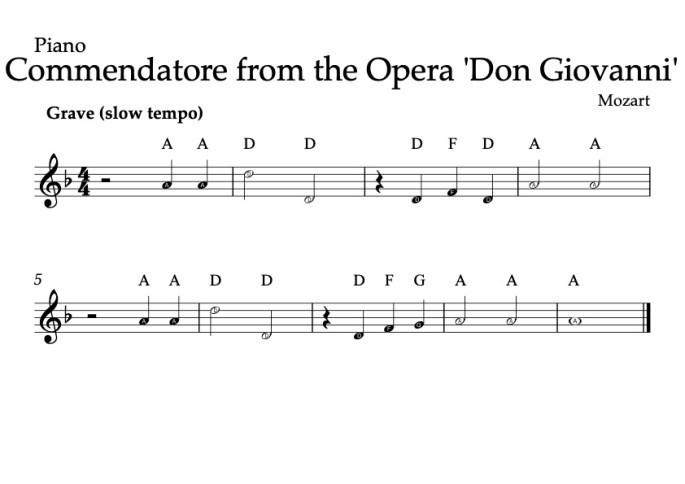
This is how I first learned to play from notation: listening to the music first, improvising what I heard, learning parts of the chart, then interspersing that with my improvisations until I developed enough confidence to know how the music should sound.

Regarding student focus, it is worth keeping in mind that when students engage with music improvisation, they can either demonstrate a monotropic (i.e. tunnel vision or an ability to focus on a limited number of tasks/interests more associated with students exhibiting ADHD and autistic traits) or polytropic (ability to diversify attention without becoming overwhelmed). A polytropic may handle improvisation better than a monotropic. Still, the latter’s intense focus, if directed well can work better when developing improv skills, owing to their ability to lock in, or at the very least, focus just enough before they get distracted or disinterested. Music improvisation gives students endless combinations of melodic or rhythmic ideas and freedom to experiment without a ‘right’ or wrong’ answer, to keep interest.

Many students with dyslexia and ADHD prefer to memorise their work rather than rely on worksheets. Early lessons emphasise modelling and visual or pitch cues, so by the end, students often no longer need written prompts. I use improvisation and embellishment as extension tasks, building confidence and justifying higher grades. Personally, I also learn best by listening, internalising, and memorising music—I’m sure I could still play the bass part from Jesus Christ Superstar after all that practice! From what I understand about myself, owing to issues with short-term memory, monotrophic cognitive load, and heightened auditory sensitivity; Music must be heard first, before I form a relationship with it. Sound over symbol, if you will.

I must also stress the need for us to be relatable and patient with students. I, like you, have seen when students become dysregulated, lost in the fog of processing and keeping emotions at bay. One does not have to be neurodivergent to understand this. As teachers, we are all altruistic and kind-hearted by nature, but making students feel we can relate goes a long way, and sharing our frustrations and successes with them helps. I have always approached my 1-2-1s with the sense that my student and I are discovering improvisation together; we both hear and experience it at the same time. That is something the notated score cannot do, as the teacher already knows it, so the student is merely trying to prove they can play it. Once your student(s) improvise, provide real-time feedback and mirror their improvisations, pinpointing where they did well, where they can improve, and, more importantly, what they can do next to develop more ideas. This method helps students create their own ideas without giving them the answer. For some SEN students, having multiple paths is liberating, knowing that any one they take will lead to the correct answer; for others, the ambiguity and lack of clarity about what is the ‘right’ answer will frustrate them. To that,

I have this analogy:

‘6×2=12 is correct, But so is 4×3, and 20-8, and 24÷2…’

Improvisation is merely the act of solving an equation, and the best improvisers know many ways to solve equations.

Setting the proper environment is vital for your students, preparing them to improvise. Here, you would need to scaffold the learning to pay attention to:

  • Understand pulse and meter, making sure the body knows this first before transferring it to an instrument or voice
  • Modelling and practising improvisations over a solid and reliable backing track/groove, where students can dip in and out of performing/devising without the fear of getting lost
  • Peer support: avoid setting students up to practice improvisations alone. Students can always go to work individually once they feel confident doing so, e.g., for GCSE compositional work.
  • Modelling how a change of musical element can alter the improvisation, i.e., a change of pitch, direction of melody (ascending and descending)
  • Reliance on rhythm and phrases. Leave gaps or ‘thinking time’ in the improvisation and encourage repetition of rhythms as a way of recycling one idea into another
  • Mistakes are part of the process. Frame students’ improvisations as demonstrating equations whilst also showing the workings out

(Wright, 2023)

One method that I have used comes from Tim Palmer, who devised improvisation stimuli based on the ‘Solid, Liquid & Gas’ method, which, in his words, promotes ‘dialogic pedagogies that are student-centred, relational, socially transformative and that support empathy for alternate voices’ (Palmer, 2023.40). The alternative voices can be interpreted as support for SEN/neurodiverse students and the plan can be taught as part of a scheme of work or as individual lessons.  

How I used Palmer’s method mainly focused on starter activities for my KS2 students, with ‘Solid’ representing improvising repetitive rhythmic patterns through body percussion or hand percussion, changing only as the rhythm fades out. For ‘Liquid’, this involved using ‘gesture-led’ (conducting) by ushering in different ‘waves’ to the shore, the waves being other students’ improvised parts which overlap with one another, i.e. students are free to move ‘outside the chosen mode to generate harmonic variety’ (Ibid, 45-46). For ‘Gas’, I used numerical melodic patterns ‘designed to represent gases dispersing into the air from a confined space’ (Ibid, 47). Starting on the 1 (1st, students would then add more notes from a scale to expand their improvisations. We began with the pentatonic scales (black keys, major and minor), then moved to major and minor scales. I understood Palmer’s vignettes to be open to interpretation, which, on reflection, helped my SEN students make music accessible, reduce reliance on text or musical symbols not yet understood, and create space for students to explore music and use their imaginations.

Palmer, 2023 49

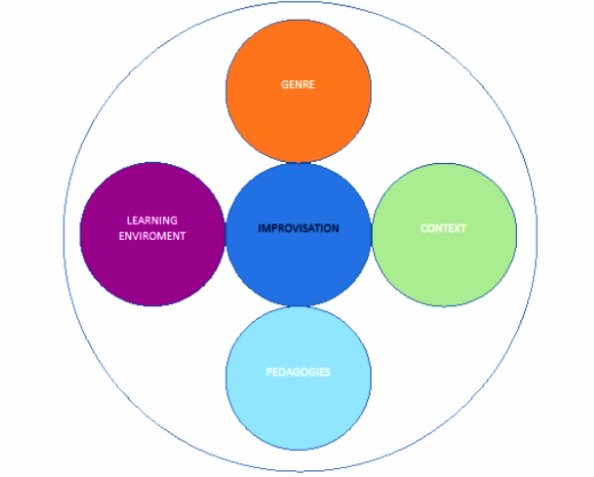
Palmer separated his improvised method into the model below:
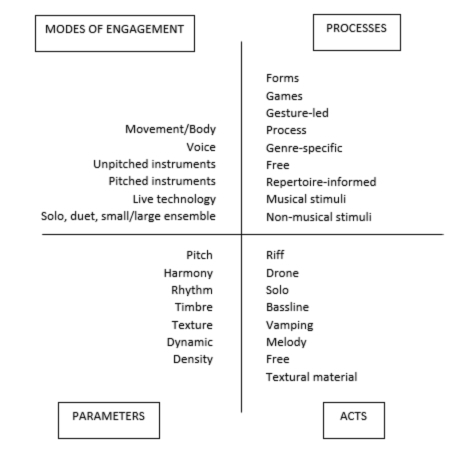
Ibid, 46

I reflected after each lesson on how students engaged with Palmer’s method, how I structured activities, and which outcomes I targeted. Some factors were beyond my control; students often switched engagement styles or shifted focus from melody to rhythm, such as turning a keyboard into a drum kit. Over time, I learned to accept these variations. Neurodiverse/SEN students absorb information in their own unique ways—often different from non-neurodiverse students.

Support for your high-ability/confident students can also utilise music improvisation; they may already be improvising naturally. Referring to monotrophism, the process of learning improvisation will naturally require concentration and immersion in the minutiae of how it all works. I recommend sign-posting your students to specific musicians and challenging them to learn their language carefully. ‘How does Stevie Ray Vaughn’s vibrato technique differ from John Mayer?’ ‘What do you notice about the rhythmic phrasing of Chick Corea?’

If your students are not drawn to musicianship, use what they already know and build on it. ‘I notice you always start your improvisations with long notes, how about playing shorter notes first?’ ‘You like using the black keys on the keyboard, don’t you? Ever wondered what one of the white keys would sound like if you included them?’ (a trial-and-error method here; you could nudge students towards using B, C, and F, or highlight chromatic passing notes).

This is somewhat autobiographical for me. I remember not knowing anything about music theory in school, and I could just about read tablature. I could pick things up incredibly quickly by ear and internalise them to the point that I could play musically correct parts while demonstrating the details of who I was mimicking. I knew so much about music theory before even knowing what music theory was! Lessons were, as in the 90s, not as diverse regarding adaptive learning as they are today so music lessons focused on notation I could not read (I could not read properly anyway), music I did not understand (If it was not BB king or Offspring, then I would switch off) or practicing with fellow students who could not play (I would learn the part from the teacher, then get frustrated as to why my mates could not do the same). It was much later that I knew the theory that I could put all the pieces together, but I wish I could have done it sooner; another trait of neurodiversity: the feeling of regret mixed with a bit of embarrassment.

There may be a thought as to whether music can help neurodiverse/SEN students learn actually mean, can music help neurodiverse/SEN students behave more in a non-neurodiverse/SEN way? The challenge we face when planning for all learners is the time required, the considerations for all learners, and the pressures from our institutions to show results within their frameworks. We also need to factor in behaviour for learning aspects, and the more demanding our students needs are, the more challenging they are for classroom management and our energy levels. My model of using music improvisation I feel is akin to an adaptive learning framework. I plan my lessons for the baseline of learners but allow for freedom within what is learned via improvisation. No extra planning needed, just giving students my permission to interpret what is learned in their own way, whilst putting in gentle scaffolding to ensure what is being improvised still fits within the lesson objective. This is more so for ADHD students, as they may produce multiple versions of the lesson objective and forget what they created (depending on the type of ADHD, of course). Autistic students, by and large, like the familiarity of structure and avoidance of change or extension tasks, unless one can communicate the benefits of these changes, which are mood dependent. Improvisation can be effective for students with Autism, more so when devising/composing. Still, it becomes a problem when performing, especially when students become dysregulated.

How music improvisation could benefit our neurodiverse students is a research topic I really want to develop, not only for my classroom practice but also because I feel it is important and perhaps still to be discovered, with the potential it may have for our students.  

REFERENCES

Berliner, P. (1994). Thinking in Jazz. Chicago: University of Chicago Press.

Borgo, D. (2007). Free Jazz in the classroom: An ecological approach to music education. Jazz Perspectives, 1(1): 61–88.

Hickey, M. (2015). “Can improvisation be ‘taught’?’: A call for free improvisation in our schools. International Journal of Music Education, 27(4), 285–299.

Kanellopolous P. A. (2011). Freedom and responsibility: The aesthetics of free musical improvisation and its educational implication– A view from Bakhtin. Philosophy of Music Education Review, 19(2), 113–135.

Overy, K. Norton, A. Cronin, K. Gaab, N. Alsop, D. C. Winner, E. Schlaug, G. (2004). Imaging Melody and Rhythm Processing in Young Children, National Library of Medicine

Philpott, C and Cooke, C (2023). A Practical Guide to Teaching Music in the Secondary School. Second edition. Routledge Teaching Guides. Routledge, Taylor & Francis Group, (Palmer, T), p.39, p.43-49

Shmerling, R, H (2024),‘Right brain/left brain, right?’health.harvard.edu

Walduck, J. (2024). Improvisation Pedagogy: What can be learned from off-task sounds and the art of the musical heckle? British Journal of Music Education, 1-11. Wright, M (2023), Teaching Music Improvisation

How To Get You and Your Students Improvising #thatmusicimprovteacher

This article will be in Music Teacher Association Ensemble Magazine Autumn 2025 edition, available to MTA Members:

To join, click here https://www.musicteachers.org/join-us/

Hello all! I hope you have all begun the year well and have already used some improvising techniques with your students!

I offer you some tips and a sample lesson plan to get your students improvising in music and present some tips on assessing and strategies on how you can embed improvisation in your teaching.

But first, a reminder:

Improvisation is often thought of as spontaneous musical creativity, i.e. an “on the spot” exercise, but as I have mentioned in previous editions and articles, it is actually built upon a foundation of learned vocabulary, developed through practice, and carefully scaffolded by the teacher to break down into manageable chunks. It is necessary for you and your students to build a memory bank of ideas, rhythms and patterns to recall them at any moment (think of this as one’s music improv vocabulary), having the confidence and play to manipulate them in the moment. This is why students freeze when asked to improvise; they probably have nothing to draw upon!

Advice for your Students  

For keyboard/Xylophone players, the pentatonic notes and major/minor are valuable for accessibility. They represent differentiation by colour and shapes and provide an almost guaranteed fail-safe to not play ‘wrong’ notes. The pentatonic scale is the safest space for initial improvisation, before moving to more challenging scales. I suggest narrowing the key range (e.g., one octave) and having students use triads/dyads for any chordal accompaniment.

But what if they hit the ‘wrong’ note?!

Paraphrasing Miles Davis here, there is no such thing as ‘wrong’ notes in improvisation. If your students were to stumble across a wrong note, tell them they are but one note away from the ‘right’ note. Jazzers call these ‘passing tones’, chromatic links to notes within a scale, e.g. play a C# over a C7 chord? No problem! Move up a semitone to a D to make a lovely C9 sound or down a semitone to play the tonic.

Students may benefit from recording their improvisations by writing or recording them. This helps build their memory bank of ideas and track their progress, satisfying learning progression, demonstrating aural skills and showing understanding of the learning outcomes.

Tips for Teachers

  • Start Small: You don’t need to be a jazz expert to teach improvisation. Begin with pentatonic scales/limited major and minor scales. Develop call-and-response activities to include more choices for responses.
  • Be Honest: It’s ok to share that you are not the most confident improviser unless you say, ‘I’m rubbish at this kids’ in which case, best to keep it to yourself! Turn the activity into a joint learning venture and choose the model of improvisation that you feel most comfortable with.
  • Use Technology or Models: Backing tracks, ostinati loops, or recorded examples help set a framework for improv. DAWs can be an excellent tool for students to experiment without being heard, and you can save progress.
  • Seek CPD and Support: My research on secondary school improvisation showed that many teachers have had little to no opportunities to develop as improvisers during their musical and teacher training. Whilst jazz academics like Barry Harris or Ed Sarath offer wisdom on how musicians can develop, it caters to more experienced improvisers. Jazz in Education UK founders Pauline Black and Simon Purcell, both as influential as the former two, help those taking the first steps into teaching improvisation.
  • Model Risk‑Taking: Play an imperfect improvisation, play how the ‘wrong’ notes work in an improvisation, take a well-known melody and improvise around it. Show your students that music can be manipulated into anything you want it to sound like!

Sample Lesson Plan for Teaching Improvised Melody (a Focus on Rhythm). 55-60mins

  1. Warm-Up: Body Call-and-Response
    • Teacher uses body percussion for students to echo, turning it into a fun musical register rather than saying their names. Improvise accessible rhythmic ideas first, then move on to a selection of rhythms on the board (no more than four, scaffold the difficulty and include some known ones). Do the C&R again but have students respond with any they wish after learning them.
  2. Model: Use of Pentatonic Notes on the piano w. Rhythmic Templates
    • Demonstrate how to use any rhythmic templates combined with the pentatonic scale. Start with two notes, then three etc. Ensure you show that you are improvising the selection of notes and recycling them at will.
  3. Lesson Task: Practice Improvisation
    • Students go in pairs, select rhythm(s) from the worksheet/from the board, then improvise note choices over the rhythm. Build confidence by starting with two notes, then three etc. More confident students can add C and F to the scale to create modal possibilities.
  4. Performance
    • Play a chord vamp/use a backing track. Get the pairs to play their improvisations one by one.
  5. Plenary
    • Think Pair Share the following questions:
      • Which rhythm(s) did you enjoy improvising around?
      • Which combination of notes from the pentatonic scale did you enjoy using?
      • What happened when you made a ‘mistake’?
      • Which improvisations from the group were memorable?

Final Thoughts

The benefit of teaching music improvisation is that one can find ways of creating/devising through play. Anything can be improvised! Provided you believe it can. I got one of my ensemble students to improvise the opening of Vivaldi’s Winter on the flute by getting him to reorder the bars. Granted, some passages did not work, but most did, as they added to his improv vocabulary. Improvisation is trial and error, but who is to say that a particular idea won’t work in another context?

By changing our relationship with the ‘notated score’ as Tim Palmer puts it, one can view music not necessarily as a collection of dots and symbols to perform, but as an act of expression, discovery and adventure. Embrace the uncertainty, scaffold wisely, and watch your students (and perhaps yourself!) grow into confident, spontaneous musical voices.

Please do get in touch if you are interested in me running a session/programme to help your students/department develop improvisation.

Make sure to include any examples, successes or ideas using #thatmusicimprovteacher on your social media.

mwrightbass@gmail.com

LinkedIn – mwrightmusic

Beating the Count: A Message for Music Teachers Who Need Some TLC

First published on my LinkedIn profile

In preparation for the new academic year and a commemoration of my posting a blog since the last one which was in the late 1800s, I think, I began drafting something akin to James Manwaring MBE’s brilliant post on what he did to recharge and get inspired, and Katie Staggs’ post on teachers joining a new department. The idea sat in my drafts for ages, and I could not fathom why it was. Was it writer’s block? Summer holiday brain? Or just some good ol’ fashion procrastination? After all, that bike ride along the Tarka Trail would not ride itself.

The truth is, I am struggling to find a place of positivity for the upcoming year. A combination of reading negative headlines in the press and social media regarding declining A-Level/GCSE Music uptake this part decade, EBacc still being a thorn in the promotion and inclusion of Music in Mainstream UK education, pressures of being a one person department (check out this episode I recorded with Liz Webb on Teachers Talk Radio), my sadness over how the education community engaged in identity politics with the passing of our dear Ruth Perry, and her passing itself still makes me feel uncomfortable as to why it happened and whether lessons have been learned. Its fair to say education has me in a headlock and the referee is raising my arm, one count.

Alas, if you’re a music teacher staring down the new academic year with a mix of apprehension and exhaustion, you’re not alone. Hi, nice to meet you. Pull up a chair, I’ll make a brew and if you don’t mind, I’ll mention a few things that may help you find that light switch you’ve been looking for in the dark, or even better, help you make the count, Hulk up, puff out your cheeks, cup your ears to the crowd and deliver that Big Leg Drop/People’s Elbow to the Negative Warrior (see what I did there?)

I. Find YOUR Reset Button and Hit It

This summer, I visited my family in Finland which I had not done in decades. I thought I would kick back with Sauna, sip a few Lonkeri’s and reminisce with my kin about the times I visited as a kid. What I did not expect was the profound and emotional effect this trip had on me, or how it reminded me of my Finnish roots, which influence me as a teacher and person. I felt a complete shift in my thinking, values, and ethics, bringing what I had been striving for into stark focus. This was the first time in my career when I had a holiday during which I did this; typically, I go into Standby mode and battleplan the academic year ahead, thinking of as many permutations as I can to navigate the job. I call it thinking², a term I use to describe overthinking about thinking to the power of 2. It often leaves me mentally exhausted and no closer to finding the solution to the problem.

It sounds so obvious, but I would wholeheartedly ask you to find THAT place for you when it comes to a rest, or a resit. I kick myself for not discovering it sooner, but I am thankful I found it in the first place.

II. It’s OK Not to Be OK

Do not fight your negative feelings; you will never win. Despite the positive posts that tell you how wonderful you are and how valued music teachers are, it means nothing if you don’t feel good inside, or your limbic system has been taken hostage and all you think about is the ‘what ifs’, ‘maybe they’s’ and ‘they won’ts’.

Yes, your thoughts may disappear, but they will only appear once something threatening occurs, extrinsic or intrinsic. Listen to them as data, as Mark Manson offers. Emotions are merely one’s mind reacting to life around us, they offer nothing more than feedback to convey what is sensed. If you find yourself in a mental quagmire, find clarity to not beat yourself up over it. If you do not, it will be like a double punch to the gut, the action that caused distress, then feeling bad for feeling bad. Easier said than done, I know. During an afternoon at the summer cottage in Finland, I listed my values and ethics as a music educator and conducted a mid-year review to see if they align. It was eye-opening and helped me focus on what I can control. Once I felt I had some control, I did not think so much about the things that had not happened or responses to adverse imagined scenarios. Thinking², folks.

Perhaps a F-It list may help, as it did with me. Think of it as a bucket list, but for all the things you shouldn’t give energy to, instead direct that energy into things/people that DO matter.

So, emotions as data, make sure you act upon them and don’t just list and post them, otherwise you end up getting sucked into my next point….

III. Stay Away from Social Media (Except LinkedIn)

Before I blame our woes on our social media overlords, I will caveat this point by saying that platforms like Facebook and X have a community of supportive, caring and insightful people there. Academics like John Finney, Gary Spruce, Tom Wilkinson all post invaluable content. Also, figures like Tom Rogers and Flora Cooper offer content and programmes designed to provide insight and community with their Teachers Talk Radio and Burn Brighter Leadership offerings, respectively.

What I refer to, and to and extent James to is the toxic underbelly of divisive, identity politics-based posts on these platforms, breeding grounds for doom-scrolling and proxy debates that frankly, make me feel ashamed of the profession at times. Intelligent voices are drowned out by outrage-driven content because they play the Algorithm game better. Too many people post what is wrong/needs fixing without suggesting how they would do it constructively. Facebook is also guilty of this, not on the level that X is, but maybe it has fewer bots posting on there.I may be preaching to the converted for some, but social media is designed to generate ‘outrage’ to play to our hearts and minds, see the responses of Ruth Perry and its vile/petulant reactions from educators and policy makers who frankly, should know better.

Here’s where the likes of LinkedIn and BlueSky come to play. I love the former, it has been refreshing to connect with colleagues in sharing my Teachers Talk Radio show, research and learn from people I admire. Its also been known to cheer a Groke up like me (Moomin reference), there is nothing better than scrolling the feed to read about the successes of former students, colleagues and others in my network.

IV. Find a Mentor or Accountability Buddy

If you’re lucky enough to have someone at work who can guide and support you, lean on them and buy whatever chocolate/booze they prefer at the end of term! If not, seek a mentor online through a professional. If you are a Music teacher, the Music Teachers Association is incredible for this. I credit my career successes to the people I met there, the advice I received, and the doors it opened for me. Accountability buddies can be an asset for your health as well. Someone trusted to ensure you are looking out for you, give support where needed, and tell you some harsh truths. For lone wolves like me, I know how significant they would be to my work as they have done wonders for my health. I would love to work with a professional mentor again, as it’s challenging to bounce off colleagues who do not teach your subject, but equally, I am happy to be someone’s mentor if needed too.

V. Find the Positives

Amid the pall, there are reasons for hope, dear reader:

  • The government has announced £88 million for extracurricular activities, including music, to help young people reconnect with their communities. A godsend for music educators who want extracurricular activities at their school but cannot afford it. Now is the time to knock on your Head’s door!
  • The Prime Minister recently told Classic FM he wants to ensure music “counts towards the curriculum” and spoke passionately about its role in building confidence and life skills. It’s been a while since a politician spoke so openly about music in UK education (open in a positive sense).
  • GCSE Music uptake this year is at a high. Classic FM report that ‘More than 38,000 students took GCSE music in 2025, an increase of 6.1% compared to 2024.’
  • Music Teachers Association, as mentioned before
  • Richard Llewellyn shared with me some cool pieces of kit for composing and performance, both for A-Level and GCSE students. ROLI Airwave looks like a lot of fun to use! As does Roland’s Moon Pan. The Fieldtone Weaver pedal looks like so much fun for field recording nerds like me. Instant recording and looping of sounds? Yup, I’m in!
  • Exam boards like ABRSM offer more courses to cater to the ever-expanding number of musicians who want to make music.

Final Thoughts

How do we feel about making that comeback? Is the referee holding up your arm in the middle of the ring? It’s ok, I am not there yet either, but if I take this day by day and focus on the things to care about and learn to ride this wave instead of worrying about wiping out, I’ll probably see this through. After all, you will get more respect riding a difficult one and learn more than standing from afar complaining about or shouting at it. People will think you are just weird.

I hope this post helps you feel less alone/as a fraud, eliminating the expectations that you, dear music teacher/teacher, have to be a beacon of sunshine upon your 1st day back on INSET. If you’re feeling nervous, anxious, or burnt out, please know this: you’re not failing—you’re human, a human who cares deeply about their job and has perhaps been let down or had bad experiences to date, which fuel your response to starting back. Teaching music, nay, teaching itself in today’s climate is tough, stats don’t lie, but it’s a job that is profoundly important and rewarding if you still believe so. Don’t let anyone take that away from you.  

Take care this year. Remember, the education community has your back, as do I.

Music Improvisation in UK Secondary Schools: Part 8

In this series, I will present parts of my dissertation, ‘What strategies, activities and methods would help develop the teaching of music improvisation in UK secondary school education?’. I aim to give you insight into my improvisation research by informally presenting my findings, opinions and thoughts. It may start a discussion of the justifications, merits, and advocations for music improvisation or completely put you off and double down on why improvisation should be left out of music education. Either way, I believe it’s a meaningful conversation.

Results from Interviews & Conclusion

Background

The interviews highlighted the individual pursuit of learning improvisation and an inquisitive mind to find answers to questions their secondary education did not ask. Their experiences highlighted a divide in music education, whereby improvisation did not feature in their school education, or worse, was treated with a callous dismissal in ID B’s discovery of improvisation. For other examples, teachers were well-meaning but ill-informed to give proper assistance in developing improvisation skills. For ID C, improvisation was barely featured in his secondary education due to the pre-eminence of Western classical learning. The survey showed that only a few teachers come from an improvisational background in training as musicians and teachers. However, most teachers use improvisation in their curriculum (just under half for co/extracurricular). By anonymising the identities and backgrounds, the data did not represent a true reflection of their experiences. In hindsight, it should have been captured as an open-ended question like the one asked of the interviewees. This was a missed opportunity to look at the phenomenology between the survey and interviews to see how the experiences compare, such as the divide between secondary education’s relationship with improvising. Where is the duality between curricula and self-learning improvisation? And what is the role of an explorative mindset in learning improvisation?   

Definition 

Regardless of improvisational background, references to spontaneity and expressive and momentary music making were identified as characteristics of improvisation. These characteristics will be essential to secondary teachers in creating rationales for strategies, activities, and methods and advocating improvisation in one’s practice. Improvisation as a musical language (musicianship, notation and music theory) could eliminate barriers to demystifying improvisation by describing it as a language linked with human experience. Mentioning composition was an interesting definition that can also help bridge a better understanding of improvisation in secondary. Teachers have a better chance of promoting strategies, activities, and methods for devising, embellishing, and experimenting with musical ideas while not taking students out of their comfort zones to create improvisation (ID D).

Genre 

Genre-led teaching of improvisation featured heavily in the interviews and survey questionnaire. This may have been due to an association that genres such as jazz strongly linked to improvisation (Larsson & Georgii-Hemming 2018). A potential issue with this association is secondary teachers presuming that to teach improvisation, one must know jazz music. When designing the project, there was no emphasis placed on genre, as the intention was for participants to reveal their opinions on genre’s role when teaching improvisation. Not mentioning genre in the survey questionnaire and interview invitations should have clarified any ‘assumptions, world view and theoretical orientation at the outset of the study’ (Merriam 1988, 169). As a result, jazz and blues emerged as preferred genres, which could cause issues for teachers unfamiliar with the genres wishing to teach improvisation. Further studies on other genres, such as Early music and Indian classical, will be beneficial in ascertaining if these genres would be suitable for improvisation in secondary school. 

Strategies, Activities and Methods

The interviews shared different perspectives on what would be effective when teaching secondary improvisation. ID A’s emphasis on the neurological approach, ‘right brain’ activities and methods based on rhythm, pulse, groove and repetition is reminiscent of Sarath’s advocation for his Transstylistic method, as both mentioned repetitive framework for rhythm underpinned by a melodic and harmonic pitch framework (Sarath 2009), backed up the survey. ID B’s focused on the ‘pitch framework’ too, with the use of rhythm implied in his examples but not the main focus. ID C’s concentrated on learning by listening, genre attributes and composition by devising tied in with musical elements based on strategy and method. They also offered good exemplars for secondary teachers to use, playing the first chorus of a solo only. This advice is useful, teachers will need to take care in the exemplars they select to not put off students by making them feel improvisaiton is unobtainable.

All four represent strata for improvisation pedagogy, with the survey questionnaire sampling strategies, activities and methods mainly in line with Simon’s approach to curricular teaching. Cocurricular’s data was surprising in that it offered fewer suggestions. The presumption was that teachers would use strategies, activities, and methods in cocurricular activities because there would be more opportunities for improvisation and fewer limitations to contend with in curriculum teaching.  

Away from a more prescribed approach, the survey’s sugestion of improvisation for special needs schools deserves some consideration. Using sounding boards and allowing their students to improvise with an open scaffolding could be a great way to introduce improvisation to a group already confident with instrumental skills and have the freedom to play without restrictions. The concern is that it takes secondary improvisation back to the original issue of lacking formal strategies, activities, and methods. However, special needs and music therapists’ teachings could provide ‘a psychological template.’ (ID A) for teachers to use.

The use of improvisation at SEN schools is also worth noting due to its flexibility and explorative nature. Using assessable musical instruments for students to improvise with an open scaffolded approach could be a great way to introduce improvisation to a group already content with instrumental playing and freedom to play without restrictions. There is potential to expand improvisation pedagogy and research in the SEN area (SEN and music therapists’ teachings could provide a psychological template for teachers to use) and, most certainly, at the primary education level.

A Model for Secondary School Music Improvisation (Conclusion)

Define what improvisation Means to You  

Most people may think of improvisation as an ‘on the spot’ act, but that is just the tip of the iceberg. Good improvisers plan and practice enough ‘musical vocabulary’ to perform from memory, in the moment, in any context and many ways. Improvisation takes on different forms, whether a solo within an ensemble performance, generating ideas for a composition or embellishing a song structure or chord progression. However you define improvisation, this is what it will mean to your students. 

Genre/Topic     

Genre is essential to learning improvisation as it contextualises the learning and provides students with a framework for the vocabulary they will develop. The first thing to consider is what genres/topics you are comfortable modelling and teaching. There is no point teaching an unfamiliar genre/topic, as you will not know if the improvisations are stylistically correct. When you choose your genre/topic, introduce stylistic characteristics and typical phrases as you go, with fewer stylistic pointers at the start. You can scaffold more genre-specific traits as students develop their skills and confidence. Composition is an accessible topic. Get students to devise ideas in rehearsal time and perform their creative ideas later. This method does not use ‘real-time’ improvisation but uses improvisation at the heart of the learning. Blues and Jazz are the most straightforward genres, as many recorded examples of great improvisations exist. Some of your students may already know that Jazz uses improvisation.     

Curricular/Co & Extracurricular    

It is noteworthy to consider whether you want to teach improvisation for curricular, co/extracurricular teaching or both. Your choice depends on your cohort, class size, available breakout space, equipment, department’s schemes of work and plan and ethos for the learning. Your vision for improvisation will be necessary for how it fits in with the teaching; curricular improvisation allows it to be accessible for students regardless of instrumental skill and explores musicianship skills to develop their improvisation vocabulary. Co/Extracurricular teaching will enable you to work directly with the musicians/singers in your department to establish improvisation skills in ensemble and performance contexts. Both pathways will help your students with confidence in performing and social skills and provide a place where ‘mistakes’ are very much part of the learning process and essential to learning.      

Strategies, Activities & Methods    

Scaffolding is key, as well as using practical starters, main tasks and plenaries to get students listening and engaged musically with improvisation. Starters should focus on using body percussion/movement and voice to focus on repetitive call and response (teacher-led then moving to student-led) tasks designed to engage the ear and quickly get students improvising. Patience is key; students will be scared/reticent at first but will warm up once they feel safe doing the task. How you plan your student’s learning is important too. Do your students learn improvisation individually? Or in groups? Do they practice their improvisations to a backing track? Whatever you plan for the learning outcomes will determine what they show you as improvisers.    

If you plan for performance-based improvisation, the best place to start is with instruments. Keyboard/pianos are the obvious choices, but xylophones are just as effective in connecting the instrument with creativity. If you use keyboards/pianos, the back keys (pentatonic notes) are easy to teach call and response patterns and get students to make their improvisations. Keyboard/Piano’s are great at improvising chord progressions/shapes. White keys (C major/A minor) present a more significant challenge, so narrow the keyboard area to an octave for less confident students and encourage a broader range for more confident ones. Stick with triads/dyads (root and 3rds) for the less confident student and inversions/extended chords for the more assured. Black/white keys can also be great for composing a piece in binary form as students learn to improvise using both sets.    

Whether your students are performing or composing using improvisation, creating a template/guide for them to follow is a must.  Developing improvisers requires a bank of ideas to form their musical vocabulary, so careful planning, encouragement of repetition and decision-making are essential. A good way to capture improvised ideas could be to write /record ideas, like a diary. This can satisfy learning progression, demonstrate that students have used aural skills, and show understanding of the learning outcomes too.     

Developing a student’s understanding of rhythmic patterns and grooves is necessary to improvise fluently. Students need help with rhythmic improvisation more than melodic or harmonic. Students struggle with cognitive overload, not knowing what to do next, and not having a strong rhythmic vocabulary to fall back on. This is where the ideas bank comes in handy, as it will help students learn and recall ideas to be used for melody or chords. Avoid focusing on numbers and words when demonstrating improvisations and focus on shapes and metaphors. The less information students can process to access improvisational activities, the better. Ideas can be borrowed from what students already learned, i.e. using straight quavers to play a jazz pattern, with compound (swung) quavers introduced later once they build upon prior knowledge to add to new knowledge. Having a sound understanding of stylistic grooves will also be a factor in your improvisation teaching, and this can be developed through call and response, along with clear exemplars of improvisations that model what you teach. Just be mindful of these examples; the first chorus of jazz solos is good to play as the soloist usually takes a while to warm up, and you would not want to scare off students by playing a blisteringly fast and technical solo from the start!  

Be mindful of the learning outcomes and create an assessment plan that is authentic to the improvisation you teach. Fluidity, articulation, theme and repetition could be areas you wish to assess. Differentiate for different outcomes. Improvisation can take many forms, whether melodic (selecting notes from a scale), using rhythmic patterns, or comping a chord progression. A well-planned and challenging lesson is achievable even if the results do not show initially.  Be patient: students develop at different levels, and it takes time for improvisation vocabulary to become embedded.

Supporting Your Student’s Improvisations  

It’s a defining characteristic in professional careers and expresses one’s identity as a creative artist. Improvising can be a transformative experience for your students and help unlock the creative potential for new and exciting music-making.

Most of your students might not feel comfortable with improvising, and the very nature of making music without some form of notation or structure is scary for some. It can also be utterly petrifying and put even your most talented students into a situation where they feel like beginners; after all, creating music without notation is scary! Therefore, an environment where ‘mistakes’ are encouraged as part of the learning process and used as part of improvisation is crucial. 

Ensure you give them enough opportunities to improvise in front of people beforehand, letting them know beforehand that it’s ok if they choose not to. Improvising can be a transformative experience for your students and help unlock the creative potential for new and exciting music making, it can also be utterly petrifying and put even your most talented students into a situation where they feel like beginners.    

Be mindful of the learning outcomes and create an assessment plan authentic to the improvisation you teach. Fluidity, articulation, theme and repetition could be areas you wish to assess. Differentiate for different outcomes; improvisation can take many forms, whether melodic (selecting notes from a scale), use of rhythmic patterns or comping a chord progression. A well-planned and challenging lesson is achievable even if the results do not show initially. Be patient: students develop at different levels, and it takes time for improvisation vocabulary to become embedded.

Finally, encourage your students to take risks and celebrate successes! It’s tremendously brave of any young musician to stand up and perform an improv, so do not dampen their spontaneity to improvise, even if you are working on non-improvised topics. You will know the true extent of your success when students incorporate improvised ideas in your lessons or produce a solo/piece of music with confidence and imagination.   


Wright, 2023

This proved quite challenging when trying to summarise my research into a succinct and accessible model, albeit one that is in its infancy regarding introducing the idea of improvisation in secondary music education. I will say that I have been overwhelmed by the music community’s response to this, and I have been privileged to speak at a Music Teachers Association conference, Jazz in Education, Music & Drama Expo and Curriculum Music conference within the first year of finishing my Masters. I will post a blog (maybe Vlog, but it has been a while since I’ve done one!) later on, but for now, I thank you, dear reader, for supporting the work I do, and I am excited about the potential impact of our collaborations in developing improvisation and putting it back in its rightful place in music education.

Best wishes,

Michael Wright

Larsson, Christina, and Eva Georgii-Hemming. 2019. “Improvisation in General Music Education – a Literature Review.” British Journal of Music Education 36 (1). Cambridge University Press: 49–67, p.59-60.

Merriam, Sharan. 1988. Case Study Research in Education: A Qualitative Approach. Jossey-Bass, p.169-170 


Sarath, Ed. 2009. Music Theory through Improvisation : A New Approach to Musicianship Training [Electronic Resource]. Routledge, p.43-83

Music Improvisation in UK Secondary Schools: Part 5

what are my questions for research?

In this series, I will present parts of my dissertation, ‘What strategies, activities and methods would help develop the teaching of music improvisation in UK secondary school education?’. I aim to give you insight into my improvisation research by informally presenting my findings, opinions and thoughts. It may start a discussion of the justifications, merits, and advocations for music improvisation or completely put you off and double down on why improvisation should be left out of music education. Either way, I believe it’s a meaningful conversation.

This part of my research was the hardest to create. Many hours and emails to my supervisor were spent devising the questions, particularly the survey. My case study and research success was down to getting this right (no pressure then!). If the interview and survey questions didn’t align with my topic, my data wouldn’t match my outcomes, thus making my research null and void.
I wanted my data to be an honest, accurate reflection on what educators employ in their improvisation practice and express their experiences at learning, or not learning, improvisation at school, how they learned and developed improvisation and what they do as educators to teach/encourage improvisation.

Looking back on my project proposal, my supervisor’s comments led me to reflect on the specificity of questions and how these would guide me when collecting data. Comments such as:

  • ‘Are these things (questions) based from your research? Or do you mean through your research?’ 
  • ‘Is it (research) about imagination, or making findings accessible for a wider community, or utilising more diverse forms of knowledge?’

The first comment was challenging, relating to the context of the questions. If my questions were formed from research, then that would imply that my literature review has a significant influence and requires a robust understanding and definitions to validate my work. If through then I consider the literature review a step in the research process.

With the second comment, I did want to make the findings accessible to all. My goal was a research project defined by, contributed with and presented to music educators, with a dash of utilising forms of knowledge. I wanted my data to be an honest, accurate reflection on what educators employ in their improvisation practice as well as express their expereinces at learning, or not learning improvisation at school, how they learned and developed improvisation and what they do as educators to teach/encourage improvisation.

Here are my two research questions:

What would be the most effective strategies, activities, and methods for teaching improvisation?

The term ‘effective’ is ambiguous for good reason. I was not looking for responses that demonstrate successful results but instead represent success through the objectives of the participants. Educators think student buy-in and inclusivity for improvisation as the ‘success’? Great! Improvising over an irregular time signature? Also great! The research was not designed to signpost improvisation’s secondary role by creating selectivity in particular viewpoints of improvisation. My selection process came from teachers of all improvisatory experiences sharing their opinions and experiences, helping me to make a pro forma for those planning and delivering improvisation lessons.

Strategies, activities, and methods were chosen as reference points to represent how a music educator teaches music. Before the project, I believed improvisation could be taught in secondary schools; it just needed a collective pedagogy that is accessible to all, easily adapted, and changed to fit the context of what the educator wants to teach.

Not all music teachers use lesson plans, schemes of work, and unit plans, but all use strategies, activities and methods to plan workshops, lessons, lectures etc. The term promotes relatability in teaching, which secondary school improvisation will need to achieve for wider inclusion in music education.

What role does genre play in secondary improvisation?

This examines genre’s role in teaching improvisation in secondary education and its impact from educators’ standpoint. In my opinion, genre helps identify the listener with the music and associations with what the genre represents to them. As an improviser, I acknowledge genre regarding stylistic choices and associated musical features with the genre. However, teaching it to secondary students would require some thinking regarding how one addresses gender teaching improvisation. Students may have formed opinions on genres associated with improvised music, and educators, too, have similar opinions, struggling to break stereotypes down. Perhaps improvisation is thought of as something exclusive to specific genres that require skill and technique to perform, i.e. Jazz or Blues, not aware that it’s a transferable skill which can be used as a devising technique for composition and other genres not strongly associated with improvisation. The role of genre is important enough to explore in secondary education, and I hope it could produce significant findings for teachers to consider teaching improvisation if this turns out to be a barrier.

By following these two questions, and not the half dozen I originally intended (!), my lecturers explained that this was necessary not only for sticking to the topic but also for the next stage of research, results and coding. I now recognise the logical nightmare the latter would have been if I had gone with a scattergun approach to questions!

Music Improvisation in UK Secondary Schools: Part 4

Methodology: How to gather data that represents the current landscape of music improvisation in UK Secondary education

In this series, I will present parts of my dissertation, ‘What strategies, activities and methods would help develop the teaching of music improvisation in UK secondary school education?’. I aim to give you insight into my improvisation research by informally presenting my findings, opinions and thoughts. It may start a discussion into the justifications, merits and advocations for music improvisation or completely put you off and double down on why improvisation should be left out of music education. Either way, I believe its a meaningful conversation to have.

Choosing my methodology was a painstaking process that saw many revisions and misunderstandings on terminology. I felt a bit silly when presenting this in my viva voce! What helped me solidify my approach to the dissertation was this video by Amgad Badewi:

He expertly defined the terminology I needed to justify my rationale and narrowed down what I wanted to find out and how I would get there.

Firstly, is the research aiming to fill a knowledge gap (measured academics, theoretical) OR solve a problem? (applied scientific research). I was initially planning on solving the ‘problem’ with a lack of collectivised music improvisation pedagogy, but to go in with this approach would mean I have the pedagogical tools and academic credibility/authenticity to do it, which I don’t. How about filling in a knowledge gap? That might have legs, as my literature review uncovered methods of improvising but little in the way of secondary school. The sweet spot lies in the middle of the two, and by filling a knowledge gap, I may also solve the problem of a lack of knowledge. 

I then proceeded to the definitions of the latter two. Generally speaking, Badewi equated the Knowledge gap to positivist research and problem-solving to interpretivism. Positivism (causal/quantitive/objective research) explores reality through reading and finding information from responses from people; it attempts to find a ‘reality’ of the research. Interpretivism (non-reality) relies on descriptive/qualitative research, which is a bit more focused on what the data presents. (Badewi, 2013)

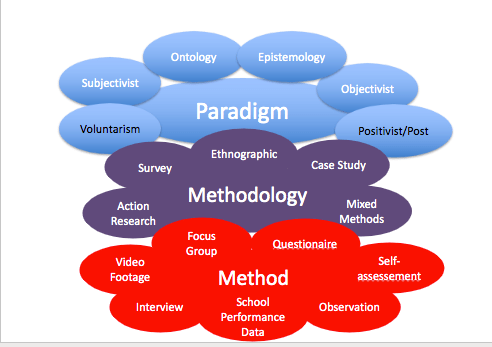
Next up is the research paradigm. What is one’s concept/model of research? 

How would the data be processed if my research aimed to fill the gap? Would it be ontological? (a belief/perception about reality (constructivism) no single reality) Epistemological? (interoperating reality) 

Figure 1. An overview of how my methodology was created

Science-based? (collect information—propose hypotheses—test hypotheses objectively) (ibid). Much of this decision was based on the data being presented in a way that authenticated improvisation strategies, activities, and methods in their most genuine way and respected the method of improvising itself. Music improvisation is open to interpretation and has many factors that determine outcomes, not just knowledge and memory recall. 

After many drafts, I finally had it. The research would conducted as a (drumroll) ’embedded single-case study’ (Cohen, Manion et al. 2011, 291), allowing for multiple data sources data built-in. 

I could not limit my data pool to just one place, so I planned for a mixed methods data collection, using an online questionnaire targeting music teachers and educators experienced with teaching music at secondary education level. Quantitative data would provide a starting point for findings, with qualitative data (interviews) embellishing the quantitive findings. Planned in two stages; stage would be the survey questionnaire, and stage two would be the interviews, including transcriptions from Music Teachers’ Association’ Teaching Notes’ podcast and live interviews with my participants. Both methods would be run concurrently with stage one coded first and then stage two. Data would be paired together to observe patterns, similarities and differences in findings. This case study required me to gather data that was fit for purpose and skilled in probing beneath the surface of phenomena, defined more by the results and findings and less by the methodology used. (Leavy 2017)

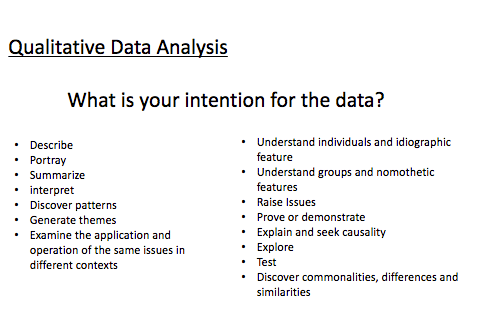
Figure 2. Notes from my lecture on quantative data analysis

A Rationale for Research Methods

My thinking was to allow my single case study’s topic to remain narrow but provide a comprehensive method for collecting my data. The qualitative data would favour the quantitative, with the latter supporting the former. I needed to be flexible, too, as the initial idea of how my research would present improvisation in secondary changed frequently. This meant the case study could present data as descriptive (‘providing narrative accounts’) (Cohen, Manion et al. 2011, 291) and help ‘identify or attempt to identify the various interactive processes at work, to show how they affect the implementation of systems and influence the way an organisation functions.’ (Bell 2014, 12) (Flyvbjerg, 2006). In this case, the implementation comes from embedding improvisation in secondary education.   

Participants’ experiences played a crucial role in validating the research and survey data, determining what is known and what can be learned by accessing the knowledge base of survey participants and interviewees, with a level of authenticity, I.e. music educators with lived-in experience of teaching secondary school music improvisation (Cohen, Manion 2011). In theory, this should have enabled the reader to recognise idiographic ideas presented by the case study, not ‘abstract theories or principles’ (Ibid, 289), letting the ‘observational evidence’ (Chapman & McNeill 2005, 98) present itself. Collecting multiple data had to be bound by commonalities and general information in current improvisational research and those who participated. Limiting what one finds in the data will bind this with identifying the phenomenon of the project’s research and serve as the project’s boundaries, defined as:   

• Cases will have boundaries which allow for definition.   

• Cases may be defined by an individual in a particular context.   

• Cases may be defined by the characteristics of the group (or individual) (Hitchcock and Hughes 1995, 319) 

This is also backed up by Yin, who also references similar boundaries of research. These include:   

  • Specificity of case study (research) questions to keep within the boundaries of the research topic.   
  • Constitution of the case study (the research’s principles and propositions, not to be confused with ethics). This includes basing the research on a ‘real-life phenomenon.’   

With additions regarding:  

  • Linking the data back to the initial research questions with analysis and triangulation  
  • A ‘criteria for interpreting the findings’ resulted from the case study. Interpreted in a way which is robust and can withstand scrutiny. (Yin, 2009)    

Interviews were semi-structured, following a template of questions tailored to fit the interviewee’s experience and job role, i.e. questions regarding strategies, activities and methods for the peripatetic piano teacher to focus on individual students. Structuring questions for each interviewee. Semi-structured interviews allowed for a more conversational approach. They allowed participants to express thoughts that may be unrelated to the topic but provided other avenues of research that could be useful. (Bell, 2014)

Qualitative data outcomes would have a different relationship with qualitative data due to changes in interviewee’s experiences, beliefs and views (Hitchcock and Hughes 1995). In essence, it captures the participants’ ‘constructions of the world’ (Ibid, 324). The participants’ experiences, knowledge, and ambitions for improvisation were triangulated through the researcher’s lens, meaning that when I changed focus, the qualitative data changed, too.    

The following types of triangulations were identified:  

  • Data triangulation – data collected over a period from more than one location and from, or about, more than one person  
  • Investigator triangulation – which involves the use of more than one observer for the same object. This can also involve member checks. That means taking data and interpretations back to the subjects to ask them if the results are plausible.  
  • Theory triangulation – which involves the use of more than one kind of approach to generate categories of analysis.   
  • Methodological triangulation – the use of more than one method of obtaining information within a data collection format.  

(Ibid)   

Things to Consider

Would my methodology fail to capture the true nature of secondary school improvisation? Or would the methodology benefit secondary school educators by standardising a topic for a cohesive pedagogy? Supposing my methodology explores what is known and/or effective and allows the reader to modify and enhance their practice, any notion of inconsequential research must be disregarded (Leavy 2017). By regulating the benefits and limitations of my methodology and ‘critically informed opinions’ (Ibid, 7) around what is effective in secondary school improvisation, I hoped to collect information that generated a model of recommended improvisation strategies, activities and methods in secondary schools.   

Critics of the case study approach draw attention to several problems and disadvantages. For example, some question the value of the study of single events and point out that it is difficult for researchers to cross-check information as a result of data’s ‘limited generalizability’ (Cohen, Manion et al. 2011, 294) and be dismissive of other similar case studies (Bell, 2014) (Cohen, Manion 2011). By designing the methodology, we expect the data to change the research path, move away from fixed research criteria, and be open to other case studies. Another argument against it is based on the focus and longevity of the case studies. Yin warns of choosing case studies that are ‘done about decisions, about programmes, about the implementation process, and about organisational change.’ (Yin 1994, 137), as none are ‘easily defined in terms of the beginning or end point of the case’ (Ibid). Hitchcock and Hughes also agree that a case is not worth pursuing if a boundary is indeterminate (1995). You can perhaps see how researching improvisation falls into this trap; my counter-argument to this was my ambitions to continue my case study by widening the data collection to develop a bigger picture of improvisation in secondary education for as long as I’m prepared to collate stories, opinions, and other research that remains within the chosen case topic’s limits (Yin 1994). The potential for this research development can only be for the gain of secondary education.   

Ethics and Acknowledging Biases

All interview participants came from a jazz performance/improvisational background. This was not by design but based on recommendations, availability and participants willingness to be in the project. Therefore, the questions for the survey and interviews did not mention anything genre-related or pertain to any reference to jazz music. It would be at the discretion of the participants to refer to genres they associate with improvised music. I was aware that use of jazz vernacular could narrow my research to a specfic audience (Leavy 2017), so any reference to slang terms for describing musicianship, was translated into a ‘mutually understandable language’ (Ibid) in order not to alienate the reader from a different musical background. 

I needed to show my subject knowledge and research expertise when interviewing and surveying participants, whilst communicating in an open, friendly and non-judgmental manner to enable access to information, empathy, rapport and trust with my interview participants (Cohen, Manion et al. 2011). This was important in bringing out the ‘wholeness’ and ‘integrity’ (Ibid, 296) of participant’s experiences, connecting them with the case study and providing a safe platform to do so, in keeping with an ethnographical representation or construction of their ‘social reality’. (Leavy 2017, 145)

How did the research design represent or construct the reality of secondary school improvisation experiences? Paying attention to one’s reality/construct of, contrasted with the participants qualitative and qualitative data, aware of its ‘validity, reliability and representativeness’ (Ibid) of responses. This also included the literature review and other results to assess the quality of strategies, activities and methods.  

A possible contention about participants being aware of the nature of research and having the freedom to express opinions could be participants’ bias for/against music improvisation in secondary schools or embellishment/exaggeration of their strategies, activities, and methods, which made it hard to control the research phenomena. The likelihood of this happening was down to the trust I had in participants answering honestly and accurately, afterall it wasn’t as if they stood to benefit anything personally from embellishing their responses.

Bell, Judith. 2014. Doing Your Research Project. [Electronic Resource] : A Guide for First-Time Researchers. Sixth edition. Open University Press, p.10-14, 178-192

Chapman, Steve, and Patrick McNeill. 2005. Research Methods [3rd Ed.]. 3rd ed. Routledge. 98-101

Cohen, Louis, Lawrence Manion, Keith Morrison, and Richard Bell. 2011. Research Methods in Education. [Electronic Resource]. 7th ed. Routledge, p.228-229, 289-296

Flyvbjerg, Bent. “Five Misunderstandings About Case-Study Research.” Qualitative Inquiry 12, no. 2 (April 2006): p.219–45, p.219-224

Hitchcock, Graham, and David Hughes. 1995. Research and the Teacher. [Electronic Resource] : A Qualitative Introduction to School-Based Research. 2nd ed. Routledge, p.316-329

Leavy, Patricia. 2017. Research Design : Quantitative, Qualitative, Mixed Methods, Arts-Based, and Community-Based Participatory Research Approaches. Guildford Press, p.5-10, 27-30, 129-148

Merriam, Sharan. 1988. Case Study Research in Education: A Qualitative Approach. Jossey-Bass, p.169-170

Welch, Graham F., Adam Ockelford, Sally-Anne Zimmermann, Evangelos Himonides, and Eva Wilde. 2016. The Provision of Music in Special Education (PROMISE) 2015.

Yin, Robert. 2009. Case Study Research: Design and Methods. Thousand Oaks, Canada: SAGE Publications, p.27

Yin, R.K. (1994) Designing single- and multiple-case studies, Nigel Bennett, Ron Glatter, and Rosalind Levacic, Improving Educational Management: Through Research and Consultancy. 1994. p135-156