
By now, music teachers and educators will be busy preparing for a new term. This might include thinking about how the year will be mapped out, which schemes of work will be used for different year groups, planning resources or, in my case, looking into the various ways I can use my vintage Vox AC30 in lessons (aside from when I teach ‘Killer Queen’ to my GCSE classes, a given of course).
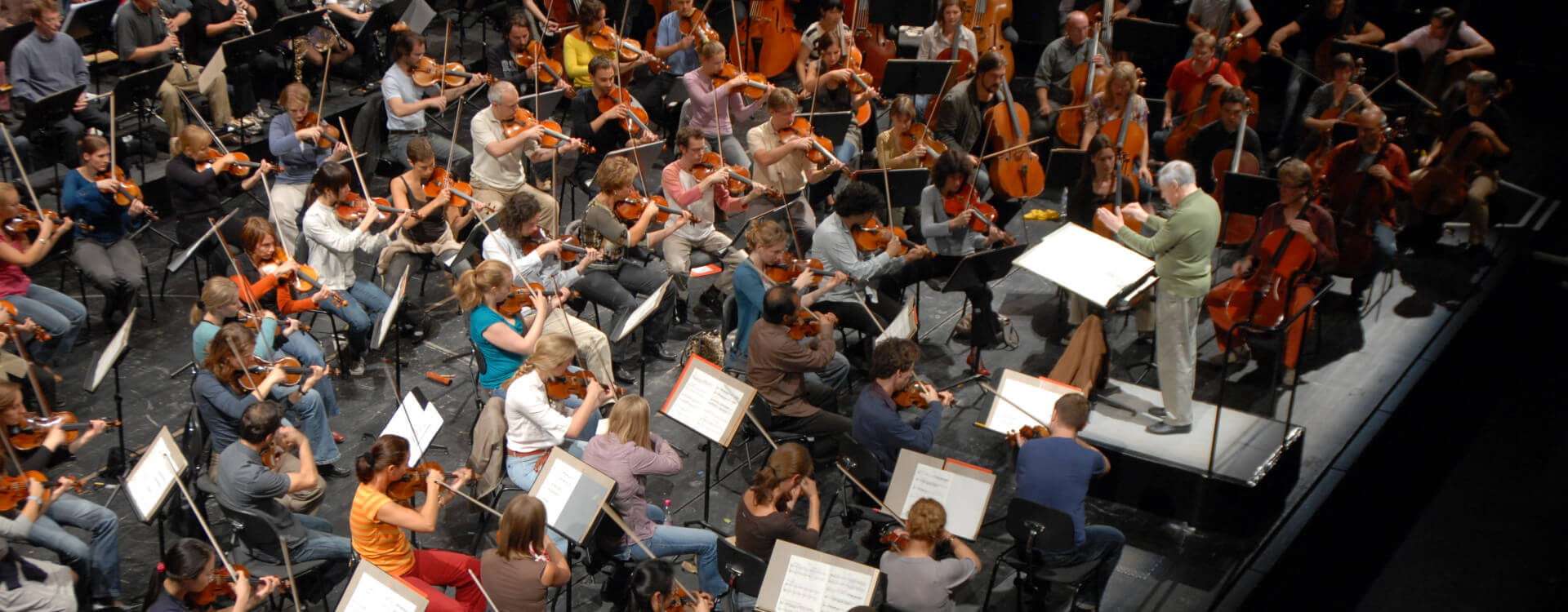
In preparation for the upcoming academic year, I have loads more new ensembles. At any given time, this would be fine, except that it has been quite a while since I ran a proper ensemble/group. By going over previous recordings, notes, charts and memories, I started to feel invigorated by the prospect of retaking ensembles. I relished the challenge to re-establish music as a movement to bring students together and test their skills and character to achieve the collective spirit that had been taken away from them.
With that in mind, I present my take on how to run ensembles and groups:
make Your ensembles/groups as inclusive as possible
One of my leading ensembles, the Modern Music Ensemble, consists of the usual contemporary instrument lineup (Rock/Pop rhythm section, brass, woodwind etc). As the ensemble grew in popularity, I got requests for an additional bassoonist, two horn players, vibraphonist, percussionist who all wanted to join. Out of these, I personally invited about half as they expressed to join an ensemble where they would get to have a more individual voice and not be lost in the orchestra shuffle.
By diversifying the personnel in MME, I learned to make my ensembles more inclusive, not an ‘exclusive club’ to fit the conventional needs of music associated with the ensemble. This gives students the chance to perform in concerts, gain valuable experiences, and hopefully develop their ‘life-long learning’ journey with music and the instrument.
Another factor I consider essential, yet some may feel insignificant, is the name of your ensemble. I inherited MME as ‘Junior Jazz Ensemble’, which had been the name even before my predecessor. Still, I thought there are two problems with this name:
a. It’s limiting; only intended for Junior musicians?
b. It’s limiting; we’ll only cover jazz material?
Thankfully, the original name, ‘Super Fun Happy-Clappy Ensemble’ was nixed by my better judgment. The title ‘Modern Music Ensemble’ felt much more appropriate. The new name suggested that we’d cover music out of the jazz bracket. However, I still arrange jazz standards. The title would incorporate anyone who plays an instrument in the school, regardless of junior or senior school. It’s been a joy to see the older students mentor the younger ones and see their work in other groups and ensembles.
The main remits for ensembles/groups are to develop students musical understanding and entice confidence from them; having such an eclectic mix of instruments yields some pretty cool music!
Arrange the music to fit your musicians
This links with the above point but focuses on your musicianship and arrangement skills. I had an eclectic mix of instruments when I started working with MME; all varying in ability and experience. Though this is not unusual with school groups and ensembles, I found that my differentiation skills were tested when creating parts for my students. When organising the music and rehearsals, the best advice I could give would be; arrange your music for the musicians you have. Part of the fun with my Guitar Club is getting individuals to play the bassline, chord progression, main and counter melodies.
Tell your friends, and parents
My frontline grew by students coming along and then inviting their friends, where once I worried about the lone flautist, now I have four of them! It goes without saying that your students will keep coming back because their friends come along too. My Ukulele groups were full of students who wanted to play and learn with others, which made the atmosphere very welcoming and turned into a quasi-social gathering with Ukuleles. Like a class full of George Formby’s but minus the Yorkshire accents.
My colleague supplements their clubs with sweets. It helps create probably one of the best atmosphere’s I’ve seen in extra-curricular activities. If there is a chance to do the same (especially as most clubs go into lunch or after school), having a little sweetener, pun intended, wouldn’t go amiss. As for parent’s buy-in, if they see their child enjoying your ensemble/group, they’ll support what you do. Convenient when you reach a busy term and need students to participate in upcoming concerts.
Encourage student participation and suggestions
Students are your best teachers; they can be some pretty boss MD’s too! Every group and ensemble I run always has an element whereby I promote student’s ownership of what we do. These could be song suggestions (though I drew the line on ‘Baby Shark’ by one of my year 11’s), ideas for performances, fundraising or even how to recruit more students. For the improvisation aspects of some ensembles, I offer options for the groups to explore during the sessions such as scales to use, rhythmic devices etc. But by far the most popular is arrangement, trickier in a larger ensemble but undoubtedly doable. By getting students to arrange the music, they get to build how they want the piece to sound and makes my life much easier, knowing 50% of the work is done by them.
Make your ensembles/groups the best event in the school
We have a lot going on in our school, tons of clubs and activities. Just this year, I will be running at least seven clubs and ensembles on top of my timetable. Students are very much spoilt for choice in a good way, so if you plan to run your extra-curricular make sure it stands out from the crowd. I had MME perform in assemblies in previous years, Ukulele clubs play impromptu Christmas songs during registration and showcased Music Tech clubs in science lessons. Now I’ve moved onto editing videos made by students and asked for them to be uploaded to the school’s YouTube channel. Music has a remarkable ability to be the perfect ‘shop window’ product when promoting the cultural heartbeat of a school, go and show the rest of ’em how excellent your work is!
Know your keys and clefs
‘So the next part is G, A Bb, F, A…oh that’s not it! Ahh I mean concert G, A Bb, F, A….hang on, you’re Bb right? and you’re F…’
It’s quite normal to get keys, clefs mixed up, and I do it all the time (bass clef to treble is my favourite). Early on in rehearsals, when I’m working with MME, I establish a concert key as the base where I teach the parts, pushing aural skills and pitch translation. I will revert to the section’s clef when needed, but I make sure that all students know what note I’m showing them on their instrument.
Where possible, capture their efforts
The byproduct of the virtual world we find ourselves in, but a massive benefit from what the pandemic did to us as a department, was to move our recitals online, streaming them live. This meant student recitals and concerts will be on the school’s YouTube channel for family and friends to watch, or otherwise would have disappeared into memory (I’m thinking of Easter ’18 where MME absolutely nailed ‘Thing of Gold’). Now, there are safeguarding issues around this, so if you’re thinking of uploading your ensemble or group, make sure you get the OK from your SLT and share them on a platform like YouTube, or one where there are parental controls on content.
If you didn’t want to go down the video route, start a social media account (linked with your school) where you can upload pics of what your group are doing. I appreciate the great work other teachers, workshop leaders and educators do with ensembles worldwide and often get my ideas this way, like a high school class covering a De La Soul classic.
Experiment, don’t be afraid to try something new
Remember when I said to embrace the unconventional instrumental lineup in an ensemble? Well, by doing so, one has no other choice but to go with something unconventional. The decision to learn ‘Thing of Gold’ with MME was quite daring, and to my knowledge, I cannot recall any other UK music teacher doing the same at school. Before you read this as smug, hear me out. What I mean is it felt new and daring to play something from the Snarky Puppy canon with this age group. It had plenty of chances to fall apart, and students could have outright rejected it, but I’m glad they didn’t. They embraced it because I felt confident in performing it, and I was very keen on broadening their musical pallet.
I also use my ensembles and groups to try out new pedagogical stuff, testing if ideas work and then applying them to my classes. My latest endeavour will have me and my students work on some exercises and methods based on Ed Sarath’s ‘Music Theory Through Improvisation’ book, which I hope will give me helpful data when I start my final year project on my Masters programme.
In sum, ensembles/groups play such an essential role in allowing music teachers to do what they were trained to do, giving back to future generations and allowing students a chance to play and study music at the very best of their ability. More than ever, music teachers and educators can play a significant role in establishing cultures again in schools. Here’s to you providing opportunities for students to pick up where they last left before the pandemic.
Good luck to you all this year x
 Mike Wright Music Education