
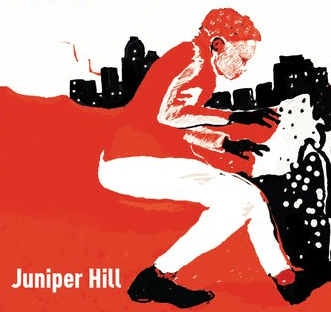
This year sees the start of my MA Teaching Musician ‘Block B’ programme. As part of the four assignments I must complete, this post is copied from my forum content where I am required to (required to? Sounds more serious than it reads!) post my thoughts on one of the Contemporary Theorists covered by the visiting lecturers. Juniper Hill was introduced by Dr Pam Bernard to us, and from Dr Bernard’s wonderful presentation to her work, created quite a stir in American music education.
Having read Hill’s book ‘Becoming Creative: Insights from Musicians in a Diverse World’ I was struck by the care and detail given to what we might perhaps take for granted as experienced professional musicians/educators, creativity. This blog is a quick peek into this idea, and one where I hope to explore Hill’s research over time. Let me know your thoughts in the comments sections.
——–
Juniper Hill organises creativity in succinct areas. Emphasis is placed on motivation as the force behind creativity, funnelling through ‘psychological traits and emotional states. These are, according to Hill, broken down into four sections.
- ‘first, to become an active music maker;
- second, to develop creativity-enabling skills;
- third, to engage in creative activities;’
- forth, ‘to take creative risks.’ [1]
Her study focused on the importance of how the student perceives their potential of developing musical competence. [2]
I find it fascinating yet daunting to think of creativity as categories, fascinating in the sense that to be creative, one must acquire the first three sections before engaging in the fourth but daunting because of the organisation/planning for this in a classroom of individuals. The first section has been observed throughout my teaching career and goes some way to explain why some students struggle to connect with music and lessons, as they may not identify themselves as an ‘active music maker,’ i.e. Musician, performer, orchestral member, chorister (UK English definition).
Once the student clears the first section, I can envision how the other ones are obtainable but understand that if any failure/threat to identity is felt, one could question their ‘active music maker’ status through ’emotional states’ lead psychological makeup.
The role of anxiety should be considered when it comes to motivation or the form it takes when going through stressors (fight, flight, free, flock). Indeed, the feeling of anxiety as a negative can ‘adversely motivate musicians not to engage in certain creative activities, both on specific occasions and in general.’ [3] If anxiety is experienced, then inner feeling or voice may serve as a warning sign or handbrake, forcing the student not to take creative risks or play it safe to avoid ridicule (also modified by Leech-Wilkinson’s cultural norms highlighted in his book, ‘Challenging Performance’)
Speaking of cultural norms, Hill addresses this further in this chapter by highlighting the benefits of a teaching culture that pertains to a right to be creative, stating ‘every human has musical and creative potential, especially for singing, improvised vocal harmonisation, and songwriting.’ This was concerning a case study from South African Xhosa musicians and contrasted with Hill’s observation of Finnish culture (mentioned earlier in the chapter) who were taught the opposite, [4] a thought that ‘Xhosa musicians may even be disciplined to believe that they can sing’ [5]
Motivation and influence from the music teacher can only go as far as the institution, parental (biological and surrogate) and societal expectations, but Hill’s research offers some substance in the power of culture in identifying themself. Music departments create identities, representatives that show communities who they are and what they represent, and it is this that makes it difficult if creativity or specific musicianship skills do not align with the ‘norm’.
Hill goes on in chapter 5 to describe a way to overcome inhibitions of creativity, justifying the means of confronting challenges outside of one’s comfort zone by ‘confronting unknown challenges, taking perceived risks, coping with the anxiety of risk, creatively using resources, problem-solving’ [6] to the end of these experiences expanding comfort zones and ‘become more willing to step outside them in the future.’ [7]
To what extent does a student need to confront their challenges? Hill cites caution in teachers overexuberance in doing this, the caveat being ‘pushed too far outside one’s comfort zone into an unsupportive environment’. [8] This can be counter-productive to creativity and severely affect self –esteem, and even damaging psychological experiences. [9]
Promoting creativity and the benefits should be treated as a double-edged sword. Reading Hill’s work has highlighted the responsibility and tactile nature one must think of when directing students to become vulnerable in performance. Improvisation, in my opinion, is one of the highest forms of musical creativity and Hill’s research shows me deeper layers to this area. By enticing creativity from students, there must be a process (see the four sections) to prepare them, all in a safe and supportive environment, psychologically speaking, to bring out the best in students.
References
[1] Hill, J. Becoming Creative: Insights from Musicians in a Diverse World, Chapter 3, 67
[2] Hill, J. Becoming Creative, 68
[3] ibid
[4] Hill, J. Becoming Creative, 74
[5] ibid
[6] Hill, J. Becoming Creative, Chapter 5, 172
[7] Hill, J. Becoming Creative,173
[8] ibid
[9] ibid
 Mike Wright Music Education